

Description
The UM66 / BT66 Musical IC is a compact and low-power melody generator integrated circuit widely used in sound-based electronics projects. It is designed to produce a pre-programmed musical tune when powered, making it ideal for applications such as greeting cards, toys, doorbells, alarms, school projects, DIY electronics kits, and learning experiments.
Known for its simple operation and minimal external components, the UM66 and BT66 musical ICs are extremely popular among students, hobbyists, and educators. These ICs generate a pleasant melody output that can be directly fed to a transistor or audio amplifier circuit to drive a speaker.
BT66 / UM66 at a glance
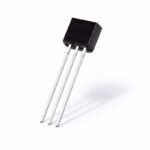
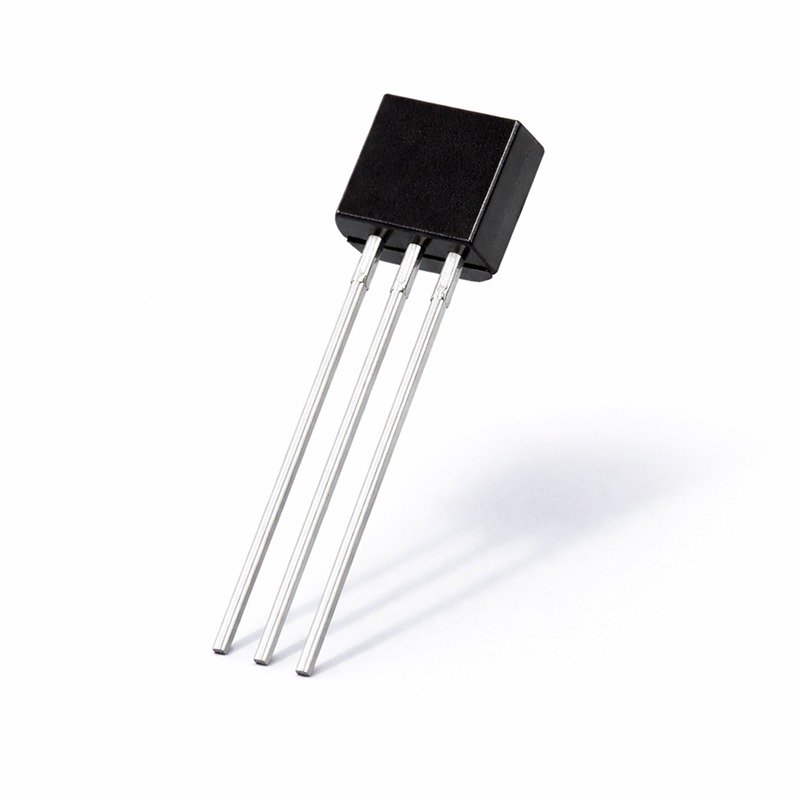
- What it is: a 3-pin melody generator IC in a TO-92 package. It plays one tune stored in its 64-note ROM as soon as power is applied.
- Pinout: the middle pin (pin 2) is VDD, the positive supply, in the datasheets we checked. The two outer pins are output and ground, and their order depends on the manufacturer (see the pin table below).
- Supply: 1.3 V to 3.3 V in the UM66T-L datasheet, 1.5 V to 4.5 V in the UTC UM66TxxL datasheet. One or two 1.5 V cells suit both.
- Output: drives a piezo buzzer, or a small speaker through one external NPN transistor.
- Datasheets: UM66T-L series (PDF) and UTC UM66TxxL (PDF).
🔍 Key Features of UM66 / BT66 Musical IC
-
Pre-programmed melody generator IC with 64-note ROM
-
Very low power consumption
-
Operates on low voltage DC supply
-
Compact and lightweight package
-
Minimal external components required
-
Easy to interface with transistor or amplifier
-
Stable and reliable melody output
-
Ideal for battery-powered projects
-
Widely used in educational electronics
-
Cost-effective sound solution
⚙️ How the UM66 / BT66 Musical IC Works
The UM66 / BT66 Musical IC contains an internal ROM where a musical tune is stored. When power is applied, the IC automatically starts generating the melody in the form of an audio frequency signal at its output pin.
This signal is relatively low in power, so it is usually connected to:
-
A transistor amplifier stage, or
-
A simple audio amplifier IC,
which then drives a speaker to produce audible sound.
The IC continuously plays the melody as long as power is supplied. Because of its low current consumption, it is especially suitable for battery-operated devices.
📊 Technical Specifications
| Parameter | Specification |
|---|---|
| Product Name | UM66 / BT66 Musical IC |
| IC Type | Melody Generator |
| Melody | Pre-programmed |
| Operating Voltage | 1.3 V to 3.3 V (UM66T-L datasheet); 1.5 V to 4.5 V (UTC UM66TxxL datasheet) |
| Power Consumption | 16 µA typical, 50 µA maximum while playing (UM66T-L datasheet) |
| Output Type | Audio Frequency Signal |
| Package Type | TO-92, 3 pins |
| External Components | Minimal |
| Application | Sound Generation |
| Condition | Brand New |
| Quality | High Reliability |
(Exact electrical characteristics may vary slightly by manufacturer.)
🔌 BT66 / UM66 Pinout (Pin Configuration)
The IC has 3 pins in a TO-92 package. Pin 2, the middle pin, is the positive supply in every datasheet we checked. The outer pins are not the same on every make:
| Pin | UM66T-L series datasheet | UTC UM66TxxL datasheet |
|---|---|---|
| 1 | O/P, melody output | VSS, ground |
| 2 | VDD, positive supply | VDD, positive supply |
| 3 | VSS, ground | O/P, melody output |
Published BT66T pinouts follow the second column (1 ground, 2 VDD, 3 output). Because the outer pins differ between manufacturers, check the marking on your IC against its datasheet before soldering. If the IC stays silent, the output and ground pins are the first thing to check.
🔊 BT66 / UM66 Circuit: Speaker and Buzzer
The UM66T-L datasheet gives two application circuits, one for a dynamic speaker and one for a piezo buzzer. For the speaker circuit:
- Connect VDD to the positive of the supply and VSS to ground.
- Take the melody output to the base of an NPN transistor. The datasheet uses a 2SC9013 and lists R = 4.7 kΩ and C = 1 µF as the external parts.
- The transistor drives the speaker, because the IC output alone is only about 2 mA.
Hobby circuits often use a general-purpose NPN such as the BC547 transistor in place of the 2SC9013. You can build the circuit on a 400-point breadboard with jumper wires before soldering. See the datasheet figures for the exact connections.
❓ BT66 / UM66 FAQ
Are BT66 and UM66 the same? They are sold as equivalent 3-pin melody generator ICs and are used in the same circuits. Check the pin order of the part you have, as shown above.
What voltage does the BT66 / UM66 need? The UM66T-L datasheet gives 1.3 V to 3.3 V (1.5 V typical) with an absolute maximum of 5.0 V. The UTC UM66TxxL datasheet gives 1.5 V to 4.5 V. Do not connect it directly to a 5 V rail.
Which tune does it play? The tune is fixed at manufacture and shown by the part-number suffix. In the UM66T-L datasheet, 19L is “For Alice” (Für Elise), 05L is “Home Sweet Home”, 32L is “Coo Coo Waltz” and 68L is “It Is A Small World”.
How much current does it draw? The UM66T-L datasheet lists 16 µA typical and 50 µA maximum while playing, which is why it suits battery projects.
More parts in Audio ICs.
🧩 Compatibility & Integration
The UM66 / BT66 Musical IC is compatible with:
-
Transistor amplifier circuits
-
LM386 audio amplifier ICs
-
Arduino-triggered sound circuits
-
Battery-powered electronics
-
Breadboard and PCB projects
-
DIY learning kits
It can be easily integrated into both temporary prototypes and permanent PCB designs.
🧪 Common Applications
This musical IC is widely used in:
-
Greeting cards
-
Musical toys
-
Doorbell circuits
-
Alarm systems
-
Sound notification modules
-
DIY electronics kits
-
School science projects
-
Hobby electronics experiments
-
Low-cost sound effect circuits
Its simplicity makes it ideal for projects where basic musical output is required without complex programming.
🎓 Ideal for Education & Learning
The UM66 / BT66 Musical IC is extremely popular in:
-
Engineering colleges and schools
-
Electronics laboratory experiments
-
STEM education programs
-
Basic electronics training
-
Student mini projects
It helps learners understand:
-
Audio signal generation
-
Amplification basics
-
IC pin functions
-
Power and ground concepts
⚠️ Usage Tips & Best Practices
-
Do not exceed the recommended supply voltage
-
Use a transistor or amplifier to drive speakers
-
Add a coupling capacitor for clean audio output
-
Keep wiring short to reduce noise
-
Use fresh batteries for best sound quality
-
Avoid static discharge during handling
📦 Package Includes
-
1 × UM66 / BT66 Musical IC
✅ Why Buy from INFYNIQS
-
Quality-tested ICs
-
Ideal for DIY, education & training
-
Bulk and institutional supply available
-
Trusted electronics components platform
-
Support for beginner and advanced projects
Reviews
There are no reviews yet.