

Description
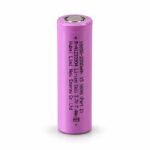
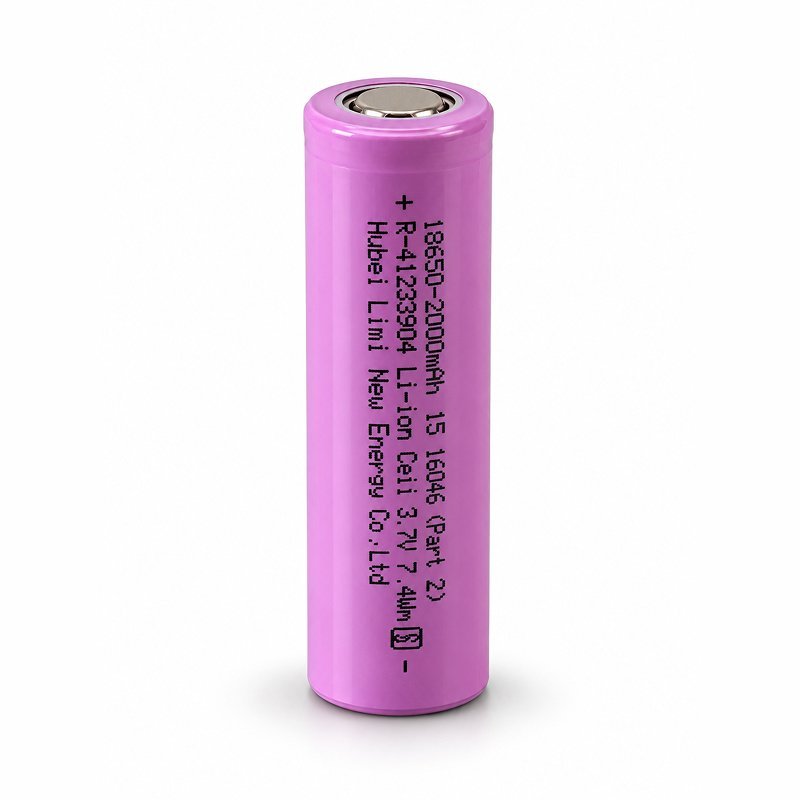
The 18650 3.7V 2000mAh Rechargeable Li-ion Battery is a compact cylindrical lithium-ion cell designed for powering compatible portable electronics, robotics projects, IoT devices, LED systems and DIY electronic circuits. The cell is marked with a nominal voltage of 3.7V, 2000mAh capacity and 7.4Wh energy rating, making it a practical rechargeable power source for a variety of electronic applications.
Manufactured by Hubei Limi New Energy Co., Ltd, this battery uses the widely adopted 18650 cylindrical form factor. Its rechargeable lithium-ion chemistry makes it suitable for applications where repeated charging and discharging are required instead of using disposable batteries.
The 18650 3.7V 2000mAh Rechargeable Li-ion Battery can be used individually in compatible single-cell circuits or as part of a properly designed multi-cell battery pack. Appropriate charging, protection and battery-management circuitry should always be used according to the application.
Key Features
- 2000mAh marked capacity
- 3.7V nominal voltage
- 7.4Wh energy rating
- Standard 18650 cylindrical form factor
- Rechargeable lithium-ion cell
- Suitable for portable electronics
- Ideal for robotics and IoT projects
- Compatible with suitable 18650 battery holders
- Can be integrated into properly designed battery packs
- Suitable for DIY and educational electronics
- Compact rechargeable power solution
- Designed for repeated charging and discharging
- Suitable for compatible charging and protection circuits
Technical Specifications
| Specification | Details |
|---|---|
| Product Type | Rechargeable Li-ion Battery |
| Cell Size | 18650 |
| Battery Chemistry | Lithium-ion |
| Nominal Voltage | 3.7V |
| Marked Capacity | 2000mAh |
| Energy | 7.4Wh |
| Form Factor | Cylindrical |
| Rechargeable | Yes |
| Manufacturer Marking | Hubei Limi New Energy Co., Ltd |
| Standard Marking | IS 16046 (Part 2) |
| BIS Registration Marking | R-41233904 |
| Application | Electronics & Battery Projects |
2000mAh Rechargeable Capacity
The cell is marked with a rated capacity of 2000mAh. This provides a useful rechargeable power source for low- and medium-power electronic applications where a standard 18650 cell is required.
Actual operating time depends on several factors, including the connected load, discharge current, circuit efficiency, operating temperature and battery condition. Therefore, the expected runtime should be calculated according to the requirements of the specific project.
Standard 18650 Battery Form Factor
The 18650 battery format is widely used in electronics because of its convenient cylindrical construction. The designation generally refers to the approximately 18 mm diameter and 65 mm cell format, although actual dimensions can vary slightly by manufacturer and terminal construction.
Its standardized shape makes it convenient for use with compatible 18650 battery holders, enclosures and battery-pack assemblies.
For prototype applications, using a suitable battery holder is generally preferable because it makes installation and replacement easier without directly soldering wires onto the cell.
Applications
The 18650 3.7V 2000mAh Rechargeable Li-ion Battery is suitable for compatible applications such as:
- Arduino projects
- ESP32 and IoT projects
- Robotics systems
- DIY electronics
- Portable electronic devices
- LED lighting projects
- Wireless sensor systems
- Educational electronics projects
- Rechargeable prototype circuits
- Emergency lighting
- Embedded electronics
- Portable testing devices
- Custom battery packs
- Compatible power-bank circuits
Always verify the required voltage, current and battery configuration before using the cell with any device.
Ideal for Robotics and IoT Projects
Robotics and IoT projects often need a compact power source that can be recharged after use. A 3.7V 18650 Li-ion battery can provide a convenient solution for compatible microcontrollers, sensors, wireless modules and portable embedded systems.
However, many development boards do not operate directly from the full voltage range of a Li-ion cell. A suitable voltage regulator, buck converter, boost converter or power-management circuit may therefore be necessary.
For example, a project requiring regulated 5V output may require an appropriate boost converter rather than connecting the battery directly to the circuit.
Charging the 18650 Li-ion Battery
Lithium-ion batteries require a charger specifically designed for Li-ion chemistry. Never charge this cell using a charger intended for NiMH, NiCd, lead-acid or other battery chemistries.
For compatible single-cell projects, an appropriate 1S Li-ion charging module can be used. Modules based on the TP4056 are commonly used in DIY electronics, provided their charging current and protection configuration are suitable for the particular cell and application.
A protection circuit should also be used where required to protect against conditions such as overcharge, over-discharge and excessive current.
Using Multiple 18650 Cells
Multiple 18650 batteries can be configured in series or parallel to achieve different voltage or capacity requirements. However, building lithium-ion battery packs requires proper cell matching and battery-management circuitry.
Cells used together should be compatible in chemistry, capacity, condition and electrical characteristics. An appropriate Battery Management System (BMS) should be selected according to the number of cells and the electrical requirements of the application.
Professionally assembled or spot-welded packs are preferable for permanent multi-cell applications.
Safety and Handling
Lithium-ion cells require careful handling. Always observe the correct positive and negative polarity when installing the battery.
Do not short-circuit the terminals, puncture, crush, dismantle or expose the battery to fire or excessive heat. Do not use a cell that is swollen, leaking, physically damaged or behaving abnormally.
Use only compatible Li-ion charging equipment and suitable protection circuitry. Avoid carrying or storing loose cells together with conductive metal objects that could accidentally bridge the terminals.
Direct soldering to an 18650 cell should be avoided unless an appropriate battery assembly process is used. For DIY projects, a compatible battery holder is generally a safer and more convenient solution.


Reviews
There are no reviews yet.